Social Security Administration in New York: What EEO and Adverse Action Rights Look Like for the Metro Area Workforce
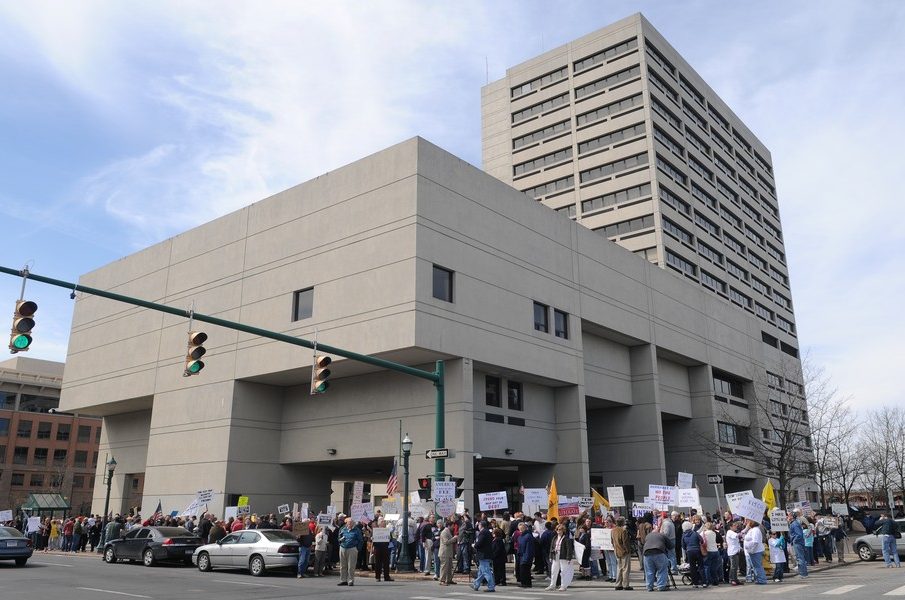
The Social Security Administration operates one of the largest federal workforce concentrations in the New York metropolitan area – at the New York Regional Office in lower Manhattan, at the Queens Disability Determination Service, at dozens of field offices across Brooklyn, the Bronx, Staten Island, Queens, and Manhattan, and at processing and hearing offices throughout the surrounding counties. The NYC-area SSA workforce faces some of the heaviest claim volume and most complex caseload conditions of any SSA regional operation in the country. When employment disputes arise in this environment – discrimination complaints, proposed adverse actions, retaliation for accommodation requests – the legal framework governing those disputes is the same framework that applies at SSA facilities nationally, but it operates in the distinctive institutional context of New York’s federal employment landscape. Any New York Federal employee attorney assessing an SSA employee’s situation needs both the federal employment law foundation and specific familiarity with SSA’s organizational structure, the AFGE bargaining unit framework at New York SSA facilities, and the ways the NYC metropolitan SSA environment shapes how disputes arise and how they need to be handled.
SSA’s Workforce Structure in New York: Who Is Where and Why It Matters
SSA’s New York metro area presence includes several distinct operational components that serve different functions and employ workers in different roles. The New York Regional Office, headquartered in lower Manhattan at 26 Federal Plaza, houses regional management and program oversight functions. SSA’s Office of Hearings Operations maintains several hearing offices across the metro area where Administrative Law Judges conduct disability hearings. Field offices – scattered across the five boroughs and in Nassau, Suffolk, Westchester, Rockland, and other surrounding counties – handle public service, claims processing, and ongoing case management functions.
The SSA employees in these components include Claims Representatives and Service Representatives who interact directly with the public, hearing office support staff who assist ALJs, teleservice center representatives handling phone inquiries, benefit authorizers and technical experts, and administrative and management staff. Most of these positions are in bargaining units represented by AFGE, though the specific local and the applicable provisions of the national agreement may vary by facility.
Understanding which component an employee works in matters for the employment dispute analysis because the operational culture, the supervisory structure, and the specific performance metrics that shape employment decisions differ across components. A Claims Representative at a Brooklyn field office operates under production metrics and public service volume expectations that differ from the environment facing a hearing office Operations Supervisor at a Manhattan ALJ facility. The disputes that arise, and the management justifications offered for adverse actions, reflect those operational differences.
AFGE Representation at NYC-Area SSA: The Grievance vs. MSPB Election
Most SSA bargaining unit employees in New York are represented by AFGE, primarily under the national AFGE-SSA master agreement that governs working conditions, discipline, and the grievance process nationwide. That representation creates the same threshold election question that applies throughout the federal workforce covered by collective bargaining agreements: when a covered adverse action occurs, the employee must choose between the negotiated grievance procedure and the MSPB appeal pathway.
That choice is more consequential than it often appears in the moment. At SSA in New York, where the AFGE local structure and the density of the workforce mean grievance representatives handle a high volume of cases, the quality of that representation varies – and the question of which forum better serves an individual employee’s specific situation requires analysis that union representatives focused on contract-based arguments are not always positioned to provide.
For SSA employees in New York whose adverse action involves discrimination or retaliation as an affirmative defense – and a significant share of New York SSA adverse actions do involve race, national origin, or disability-related claims, reflecting the demographics of the NYC-area federal workforce – the MSPB’s mixed case framework may provide a more complete legal proceeding than arbitration under the CBA. An MSPB Administrative Judge hearing a mixed case can assess both the agency’s conduct under Chapter 75 standards and the discrimination affirmative defense under the applicable Title VII and Rehabilitation Act framework. An arbitrator hearing a CBA grievance may be less equipped to adjudicate the statutory discrimination analysis with the same rigor.
The election, once made, cannot be undone. For SSA employees in New York who have received proposed adverse actions and are deciding how to proceed, consulting with an attorney before that election is made – not after – is the only way to make an informed choice.
High-Volume Culture and the Retaliation Pattern at NYC SSA
New York’s SSA facilities operate under caseload and service volume pressure that, in some respects, exceeds what SSA offices in less densely populated regions face. The demands of serving one of the largest beneficiary populations in the country, combined with chronic staffing constraints and the particular complexity of certain urban caseloads, creates a high-pressure operational environment.
That environment shapes employment disputes in specific ways. SSA management in New York, like SSA management elsewhere, relies heavily on production metrics – case closure rates, phone service levels, processing time standards – as the basis for performance evaluation. When these metrics are used as a basis for proposed adverse actions, the disconnect between what was measured and what actually reflects the employee’s work quality is frequently at the center of the dispute. An employee who handled a disproportionate share of complex cases, who invested appropriate time in difficult interactions, or whose unit’s production was affected by resource constraints outside their control may face performance documentation that doesn’t accurately reflect their contribution.
The retaliation pattern in high-volume environments is also specific. An NYC SSA employee who files an EEO complaint, requests a disability accommodation, or engages in union activity often finds that subsequent management attention to their performance metrics intensifies in ways it did not before the protected activity. Changed scrutiny of case quality, new documentation of errors that previously went unnoted, and differential application of production standards are the mechanisms through which retaliation operates in production-oriented environments – mechanisms that are harder to document than explicit adverse actions but that are nonetheless legally actionable if the connection to the protected activity can be established.
For New York SSA employees experiencing this pattern, the documentation guidance is the same as in every retaliation case but with particular attention to the metrics: preserving records of case assignments, processing time logs, and any communications about production expectations that pre-date the protected activity creates a before-and-after picture that is essential to establishing the change in supervisory scrutiny.
Disability Accommodation at NYC SSA: The Operational Tension
SSA New York employees who need reasonable accommodations for disabilities face the same Rehabilitation Act framework that applies throughout the federal government – the interactive process, the obligation to provide accommodation unless it creates undue hardship, and the EEO complaint pathway when accommodation requests are denied or ignored. What is specific to the New York SSA environment is the operational tension that shapes how accommodation requests are received.
An accommodation that modifies an employee’s ability to meet production metrics – a schedule adjustment, a reduced caseload, a modified duty assignment – has direct implications for a supervisor who is accountable for unit performance numbers. The accommodation obligation requires the agency to provide it unless doing so creates undue hardship, but the metric-driven management culture creates informal resistance to accommodations that affect production numbers.
This resistance frequently manifests as a failure to engage in the interactive process at all – management neither granting nor formally denying the accommodation request but allowing it to sit unresolved while the employee continues working under conditions that don’t accommodate their documented limitations. As discussed in the accommodation posts in this series, an agency’s failure to engage in good faith in the interactive process is itself a violation of the Rehabilitation Act, independent of whether the accommodation would ultimately have been granted.
The 45-day EEO counseling deadline for an accommodation denial or failure to engage begins from the date the employee should have received a response or from the date a denial was communicated. For NYC SSA employees whose accommodation requests have been met with silence or indefinite delay, understanding when the EEO clock started running is one of the most important threshold questions in assessing what options remain available.
What a New York Federal Employee Attorney Should Know About NYC SSA Cases
The AFGE election question, SSA’s high-volume culture and the retaliation patterns it generates, the accommodation dispute dynamics in a production-metric environment, and the specific organizational structure of SSA’s New York metro operations all shape what effective representation for NYC-area SSA employees requires.
The Mundaca Law Firm represents federal employees throughout New York, including SSA employees at the New York Regional Office, field offices across the five boroughs, and hearing office locations throughout the metro area, in EEO complaints, MSPB appeals, adverse action defense, and accommodation disputes. If you are an SSA employee in New York and are weighing your options after a proposed action or an accommodation denial, contact the firm to schedule a consultation before any election or deadline runs.




-
HVAC Replacement Cost Is More Than Equipment
A full residential HVAC replacement is priced as a complete system project, ... -
-
-
-